

Every crop loss in this guide traces to a skipped checklist item: an uncalibrated pH pen, a skipped reservoir cleaning, a clogged air stone. One unchecked pH drift cost $800 in dead plants, and a missed air-stone check suffocated twelve plants in a stagnant reservoir during a 2023 pump failure. The fix is a defined rhythm. Before planting, run a 24-hour leak test, sterilize the reservoir with a 1:10 bleach solution, and calibrate the pH and EC meters with a three-point protocol. In season, log pH and EC twice daily to stay inside the 5.5-6.5 feeding window, audit the roots weekly, and inspect the reservoir daily for biofilm and debris. Keep the deep clean separate from daily maintenance: 1:10 bleach for sterilization, hydrogen peroxide for upkeep. The cadence removes about three hours of weekly maintenance and turns the checklist into a live troubleshooting log.
I once skipped the ‘check air stones’ task in 2023, and a pump failure caused 12 plants to suffocate in a stagnant reservoir. The smell of healthy hydro is like a mountain stream. The smell of my neglect? Swamp rot. My unchecked pH drift cost $800 in dead plants. It was a failure of discipline, not of equipment. This guide is your tactical manual for a successful, resilient grow.
Key takeaways
- General Hydroponics pH Control Kit Complete pH management system with testing solution, calibration fluid, and adjustment solutions for maintaining optimal 5.5-6.5 range.
- Root-Level Benefits: Tracks environmental conditions in real-time Exportable data graphs for trend analysis Alerts for VPD outliers preventing mold/heat stress Not a Perfect Fit For: Non-tech users uncomfortable with app connectivity Battery-dependent (requires AAA replacements every 4-6 months).
- Grower's Notes: Refrigeration Needed: Requires consistent 40-50°F storage to maintain microbial viability.
- Vivosun AeroWave E6 Smart Exhaust Fan A cloud-connected 6" inline fan with EC motor technology, achieving 402 CFM at just 28 watts with automated climate scheduling.
Pre-Flight: 48 Hours Before Planting
This is your mission brief. Skipping any of these steps will turn your system into a time bomb. A successful grow is won or lost before a single seed is planted.
- 24-Hour Leak Test: Fill your reservoir with plain water and run the system for 24 hours. Check every single fitting, tube, and connection for leaks. A single drip is a security breach. A single leak can cost you your deposit.
- Sanitization Protocol: A deep clean is your preventative maintenance. It’s your chance to sterilize your system and prevent a pest or mold outbreak before it happens. Bleach is great for a deep clean, but it’s not a solution for a living system. For a deep clean, use a bleach solution to sterilize your reservoir and tubing. For a regular maintenance clean, hydrogen peroxide is your best friend.
- Gear Calibration: Your pH and EC meters are your eyes and ears. Calibrate them with a 3-point calibration protocol. A cheap meter that’s not calibrated is lying to you, and a lie will cost you your crop.
Daily/Weekly Commandments
This is your operational rhythm. A daily routine is the difference between a thriving crop and a dead one. This checklist shaves 3 hours off your weekly maintenance.
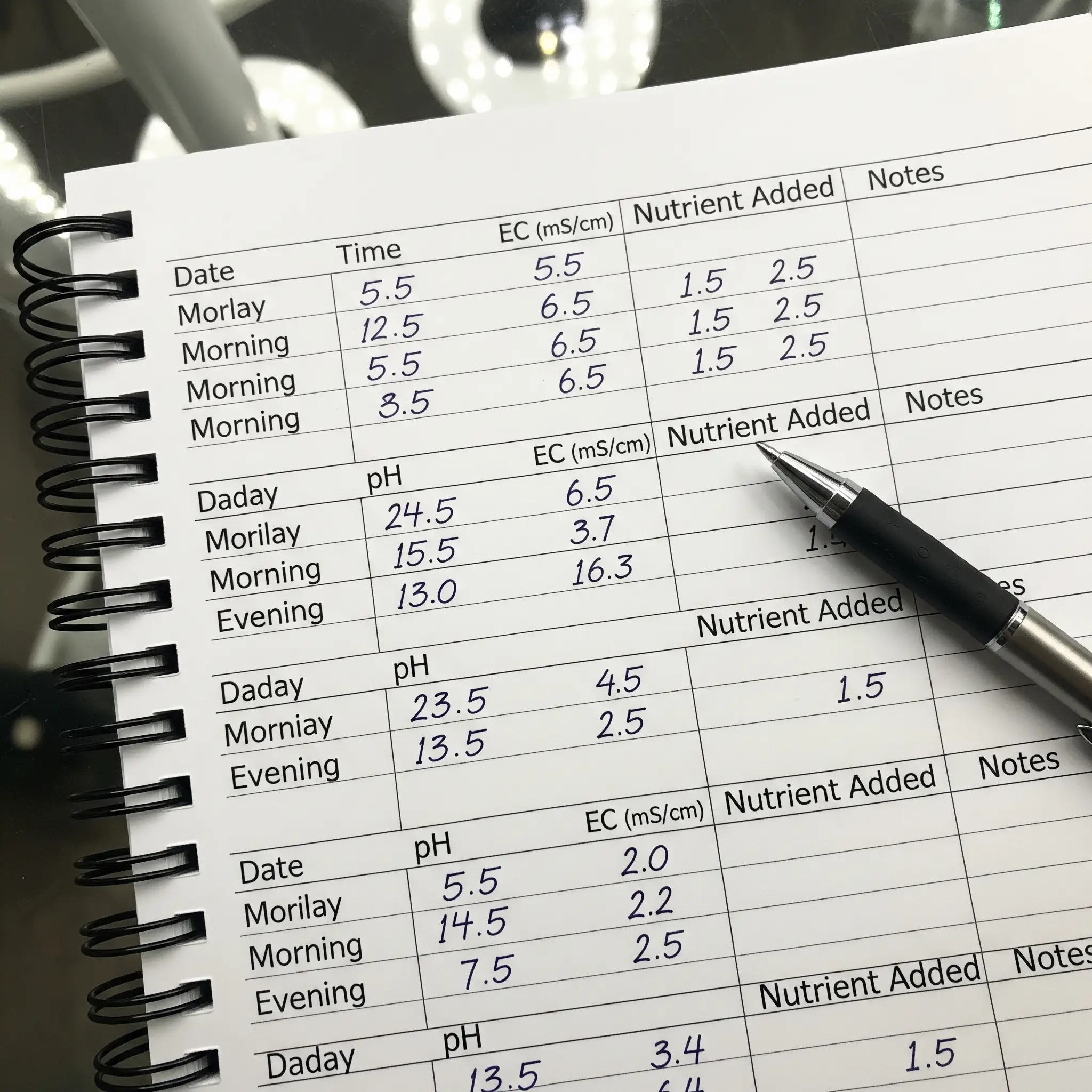
Daily EC/pH Logging: A good system will log your pH and EC twice daily, once in the morning and once in the evening. This is a crucial step to catch a nutrient imbalance before it kills your crop. My biggest “aha!” moment was realizing that my unchecked pH drift cost $800 in dead plants.
Root Health Check: A weekly visual check of your roots is a non-negotiable. Healthy roots are white and firm. Brown, slimy roots are a sign of rot.
Reservoir Inspection: Check your reservoir daily for algae, biofilm, or debris. Healthy hydro smells like mountain streams. A neglected system? Swamp rot.
The Deep Clean Protocol
A deep clean is your preventative maintenance. It’s your chance to sterilize your system and prevent a pest or mold outbreak before it happens.

Hydrogen Peroxide vs. Bleach: Bleach is your deep clean hero. A 1:10 bleach solution will sterilize your reservoir and tubing. Hydrogen peroxide is your maintenance hero. A few drops a week will keep your system clean and prevent algae.
Reservoir Sterilization: Drain your reservoir and fill it with a 1:10 bleach solution. Let it sit for a few hours, then drain it and rinse it thoroughly.
Biofilm Targets: Biofilm is a slimy, gunky film that can build up in your tubing and pump. A good deep clean will target this biofilm and prevent it from clogging your system.
Emergency Red Flags
These checklist items demand IMMEDIATE action.
pH is out of range: Your plants can’t absorb nutrients if your pH is off. Adjust it immediately.
EC is too high/low: Your plants are either starving or getting nutrient burn. Adjust your nutrient solution immediately.
Roots are slimy: Your roots are rotting. This is a sign of low oxygen and a major problem.
Pump is not working: Your plants are on death row. Fix it immediately.

Troubleshooting With Your Checklist
A checklist isn’t just a list of tasks. It’s a troubleshooting tool. When your plants look sad, you can use your logged data to diagnose the problem. My biggest “aha!” moment was realizing that logging pH at 2PM daily, not mornings, gave me a more accurate reading of my system.
Review pH/EC Logs: Your pH and EC logs are your crime scene photos. Look for a sudden change. Did your pH spike? Did your EC drop? This is your first clue.
Visual Inspection: Did you skip a root check? Check your roots for a sudden change. Are they slimy? Are they brown? This is a sign of root rot.
Cross-Reference: Did you add a new nutrient? Did you change your light schedule? Cross-reference your logs with your changes to find the culprit.
Advanced: Customizing Your Checklist
Your checklist is your blueprint. Customize it to your system and your needs.
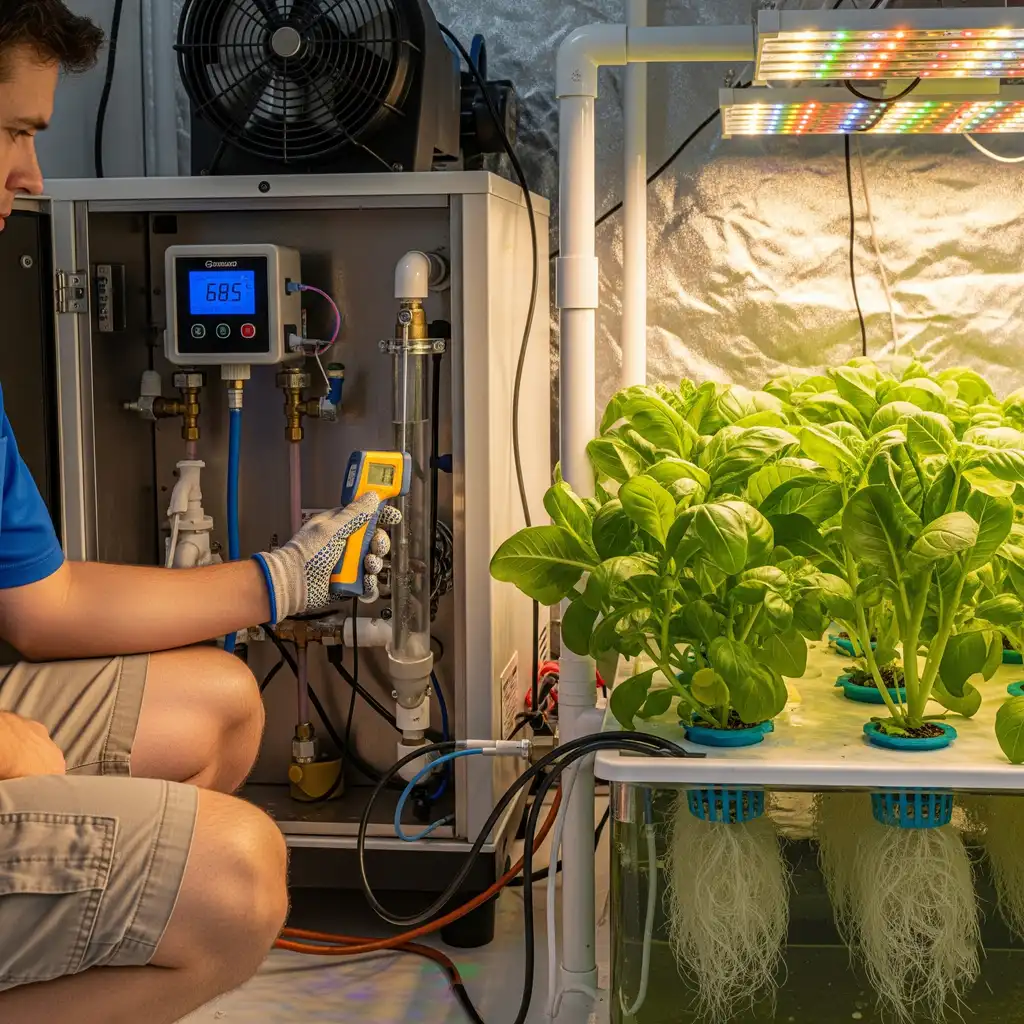
- Automated Systems: If you have an automated system, add a check for your sensors and a daily calibration test.
- Chillers: If you have a chiller, add a daily temperature check to your checklist. A chiller can help prevent root rot and other issues.
- Advanced Nutrients: If you’re using advanced nutrients, add a check for your pH and EC levels twice daily.
Streamline Your Setup: Trusted Gear for a Flawless Grow
Running through a pre-flight checklist is smart. Using the right tools for each item on that list is what separates a good harvest from a great one.
The products below are the same ones we use and recommend in our own gardens. They’ve been selected to help you execute your checklist with precision, save time, and avoid common mistakes. Each one addresses a specific, critical item on your grow checklist, from pH testing to environmental control.
General Hydroponics pH Control Kit
Complete pH management system with testing solution, calibration fluid, and adjustment solutions for maintaining optimal 5.5-6.5 range.
Please choose display type!Why Growers Love It:
- Eliminates guesswork with precise color-based pH testing
- Includes detailed guidance for interpretation and adjustment
- Budget-friendly solution for small to medium operations
Room for Improvement:
- Requires manual daily testing for optimal results
- Color interpretation can be challenging under LED lights.
Bottom Line: Essential for growers who need reliable pH monitoring without digital complexity.
Vivosun Digital pH Meter and TDS Combo Kit
Dual-function digital meter with automatic temperature compensation for precise pH and PPM readings
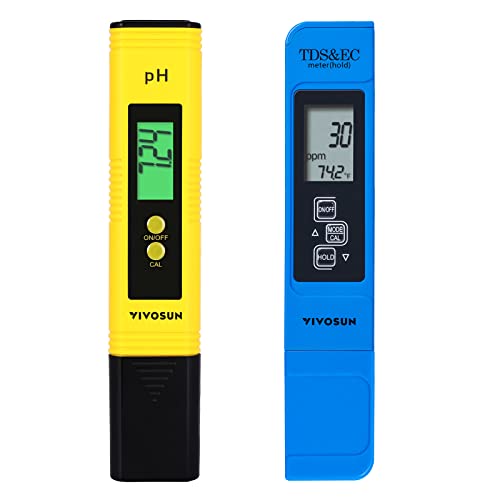
- Application: Great for all home and laboratory TDS & pH testing applications including aquariums, swimming pools
- PH Meter: Full measurement range of pH 0 – 14, reliable and quick readings
- 3-in-1 TDS Meter: Measurement Range 0-9990ppm, 0-9990µs/cm; Accuracy ± 2%, 0.1- 80.0°C, 32.0-176.0°F; Note: This meter c…
Top-Shelf Features:
- Simultaneously tracks pH and nutrient strength
- Auto-calibration with included buffer powders
- Data hold function for easy recording
A Word of Caution:
- Requires weekly calibration to maintain accuracy
- Glass electrode needs careful handling
Is It Right for Your Garden? Serious growers who prefer digital precision over chemical testers.
Govee WiFi Hygrometer Thermometer 3-Pack
Wireless sensors that monitor temperature/humidity 24/7 and sync data to a smartphone app for export.
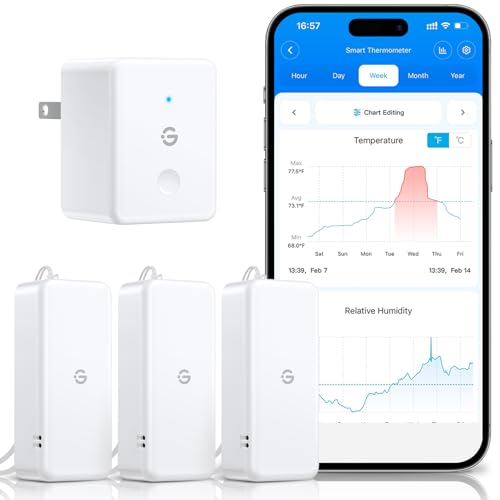
- Smart WiFi Control: Monitor indoor thermometer data anytime, anywhere. The gateway can be connected through WiFi via the…
- High-Precision Readings: The Swiss-made WiFi temperature sensor provides precise readings, measuring temperatures with ±…
- Remote Alarm: You can preset temperature and humidity values via the app. When the hygrometer thermometer sensor detec…
Root-Level Benefits:
- Tracks environmental conditions in real-time
- Exportable data graphs for trend analysis
- Alerts for VPD outliers preventing mold/heat stress
Not a Perfect Fit For:
- Non-tech users uncomfortable with app connectivity
- Battery-dependent (requires AAA replacements every 4-6 months).
The Seedling Lowdown: Perfect for growers automating climate logs.
AC Infinity Gardening Journal Logbook
A hardbound journal with structured sections for tracking pH, EC, nutrients, and environmental data across growth stages.

”Plant Log” pages allow you to track each plant you choose, from its beginnings in your garden through the growing season and beyond.nNote successes for next year.nNote what didn’t work and why, so you won’t repeat mistakes.nTuck photos, seed packets, and garden center receipts within the inside back cover pocket.
Why Growers Love It:
- Pre-formatted tables simplify data entry.
- Durable spill-resistant cover withstands humid environments.
- Includes strain comparison charts.
Room for Improvement:
- Purely manual entry (no digital integration).
- Limited space for large-scale operations.
The Final Verdict: Ideal for traditionalists who prefer pen-and-paper tracking.
General Hydroponics Defense Root Zone Treatment
A natural microbial solution that prevents root rot and protects against pathogens in hydroponic systems.

- Rapid rooter plugs are fortified with general hydroponic micronutrients for abundant root growth
- The optimal air-to-water ratio within the plug matrix results in explosive early root growth
- Use rapid rooter for robust early rooting that supports explosive plant growth
The Green Thumb Upside:
- Root Protection: Introduces beneficial microbes that outcompete harmful pathogens causing rot.
- System Compatibility: Works with all hydroponic systems including DWC, NFT, and aeroponics.
- Preventative Formula: Can be used regularly to maintain root health before problems emerge.
Grower’s Notes:
- Refrigeration Needed: Requires consistent 40-50°F storage to maintain microbial viability.
- Application Frequency: Needs weekly application for maximum effectiveness in prevention.
The Final Verdict: An essential preventative treatment for growers struggling with recurrent root issues. Particularly valuable in warm environments where root rot is more prevalent.
Vivosun AeroWave E6 Smart Exhaust Fan
A cloud-connected 6″ inline fan with EC motor technology, achieving 402 CFM at just 28 watts with automated climate scheduling.
Please choose display type!Top-Shelf Features:
- EC Motor Efficiency: Draws 45-60% less power than AC equivalents while providing superior static pressure performance.
- Adaptive Speed Control: Auto-adjusts runtime based on temperature/humidity thresholds, preventing unnecessary operation.
- Daisy-Chain Capability: Controls multiple fans through single controller, reducing energy management complexity.
A Word of Caution:
- Controller Learning Curve: Advanced programming requires understanding of VPD principles for optimal efficiency.
- Ducting Compatibility: Requires 6″ ducting; reduced efficiency if adapted to smaller diameters.
Bottom Line for Growers: The ultimate upgrade for environment control automation. Pair with smart sensors for hands-free climate management that prioritizes energy savings.
WARNING: Always calibrate meters weekly. Download is for educational use.
FAQ
Why is a pre-planting checklist so important for a hydroponic grow?
A pre-planting checklist is critical because it prevents common and catastrophic failures before you even start. It includes essential steps like sanitizing your system, performing a 24-hour leak test, and calibrating your meters, all of which save you from major problems down the line.
How often should I calibrate my pH and EC meters?
You should calibrate your pH and EC meters weekly. A non-calibrated meter will give you inaccurate readings, and a single incorrect reading can lead to pH swings or nutrient imbalances that can destroy your entire crop.
What does it mean if my hydroponic roots smell like “swamp rot”?
A swampy smell in your reservoir is a major red flag that indicates a severe bacterial outbreak and root rot. Healthy hydroponic roots should be white and firm and should have a clean, earthy smell. A bad odor is a sign of a lack of oxygen in the water.
What is the difference between a deep clean and a regular maintenance clean?
A deep clean is a full sterilization of your system using a powerful solution like a 1:10 bleach mixture, which should be done before every new grow. Regular maintenance, on the other hand, involves daily or weekly checks and adding a small amount of a cleaning agent like hydrogen peroxide to prevent biofilm and algae buildup.
How can I use my checklist to troubleshoot problems?
Your checklist can be a powerful troubleshooting tool by providing a historical record. If a problem arises, you can look back at your logged pH and EC data, notes, and photos to cross-reference with any recent changes you made to your system, helping you quickly pinpoint the cause of the issue.
Instant Field Manuals: Take your grow room optimization offline with our library of printable cheat sheets, feeding schedules, and step-by-step system checklists. Download Your Free Resources →
Compare every free calculator side-by-side on the MistCulture tools hub — each one keeps your workspace in sync.
Use the free PAR / DLI Photobiology Lab to run the numbers on your own setup.
Use the free Light Coverage Architect — Bar vs QB, Inter-Canopy & UV Blueprint to run the numbers on your own setup.
References & Science
- USDA National Agricultural Library
- NCSU CALS — Vapor Pressure Deficit resources
- HortScience — hydroponic nutrient studies
References
- ASTM D1125 — Standard Test Methods for Electrical Conductivity and Resistivity of Water
- APHA Standard Methods 4500-H — pH value (electrometric)
- Resh, H. M. — Hydroponic Food Production (7th ed.), CRC Press
Related resources
- All Water chemistry tools
- More Growing systems guides
- Open Water Quality Analyzer
- Open Ph Alkalinity Architect
Related guides
Worked Example: Pre-Flight Walkthrough, 48 Hours Before Planting
Run the pre-flight in order. Fill the reservoir with plain water and run every fitting and connection for 24 hours to catch leaks before any plant is at risk. Sterilize the reservoir and tubing with a 1:10 bleach solution, then rinse thoroughly. Calibrate the pH and EC meters with a three-point protocol so week-one readings are trustworthy, and confirm the solution is set for the 5.5-6.5 pH window before the first seed goes in.
- 24-hour leak test with plain water on every fitting and connection
- Sterilize reservoir and tubing with a 1:10 bleach solution, then rinse
- Three-point calibration of pH and EC meters before planting
- Log pH and EC twice daily to stay inside the 5.5-6.5 window
- Weekly root audit plus daily reservoir inspection for biofilm and algae