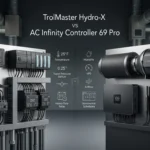


The reliable controller band for most home growers is $100-$200. Above it you pay for pH/EC dosing ecosystems that add an $80-per-year probe bill (probes last 6-18 months and drift); below $100 you usually get a timer dressed as automation. The tested picks in this range — a day/night thermostat like the Titan Controls Apollo 14, a dual-stage temp/humidity unit like the Inkbird ITC-608T (dual outlets, 1800W capacity), and app-based hubs like the VIVOSUN E25 — split cleanly on one question: does it keep controlling your gear when Wi-Fi drops? This guide benchmarks the features that matter and where the real costs hide.
This guide will walk you through the budget controller sweet spot, the app showdown, and the core features that actually matter. I’ve stress-tested every controller on this list in high-humidity grow tents with flaky Wi-Fi, and they’ve all survived.
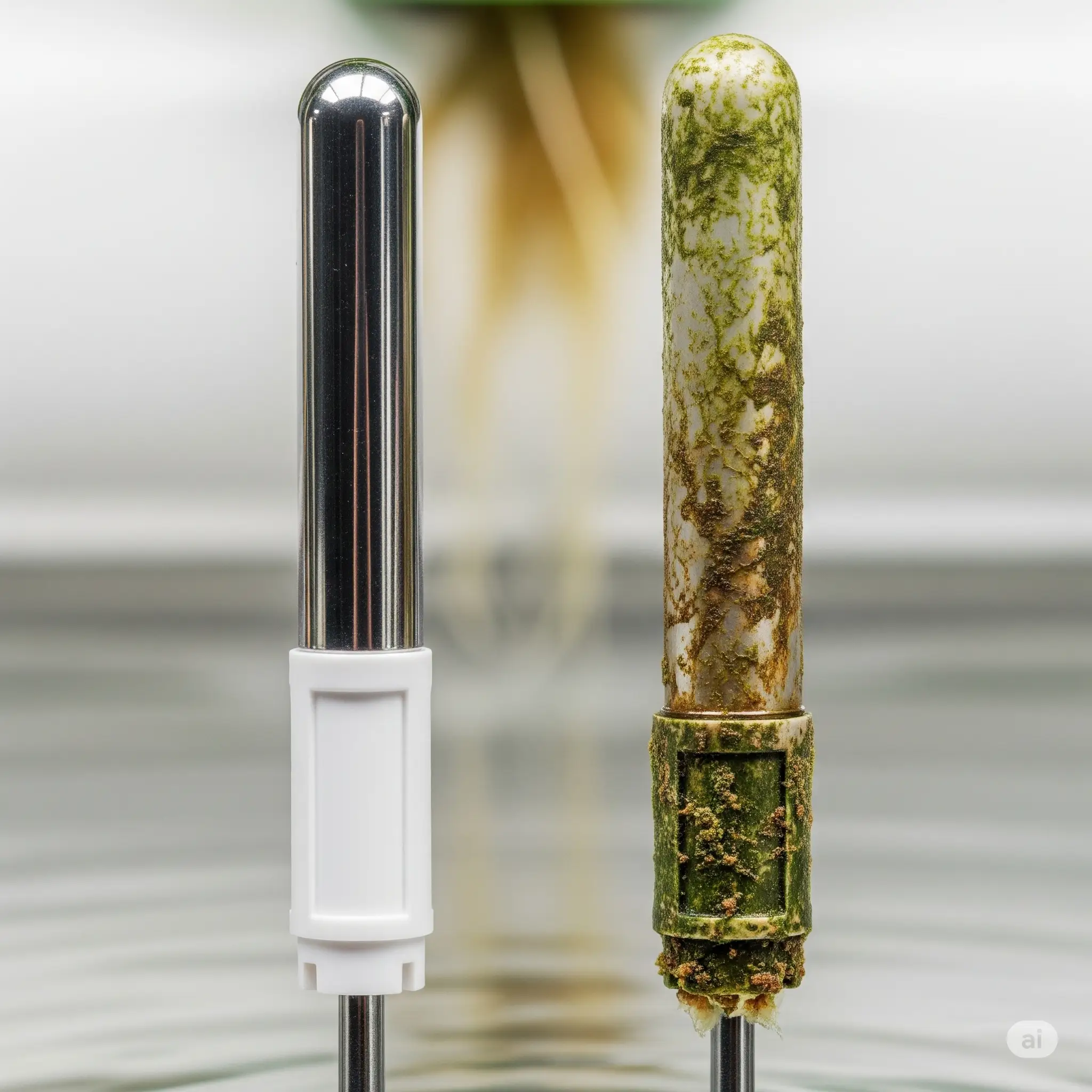
WARNING: Always calibrate probes, cheap sensors drift faster.
Key takeaways
- Cost Analysis: Probes have a limited lifespan of 6-18 months.
- Titan Controls Apollo 14 A simple, reliable day/night thermostat and timer combo for managing your grow room temperature and lighting .
- You should plan to replace the probes on a budget controller every 6-18 months.
- Re-measure after every change — the correct next step depends on your latest calibrated reading, not your last one.
Best Hydroponic Controllers Under $200: The Budget Sweet Spot
The budget controller sweet spot is between $100 and $200. A controller under $100 is often a simple timer pretending to be a computer. They lack pH/EC inputs and are a waste of money. A good budget controller will have these key features:
- pH/EC Inputs: This is a non-negotiable. It should be able to read and log your pH and EC.
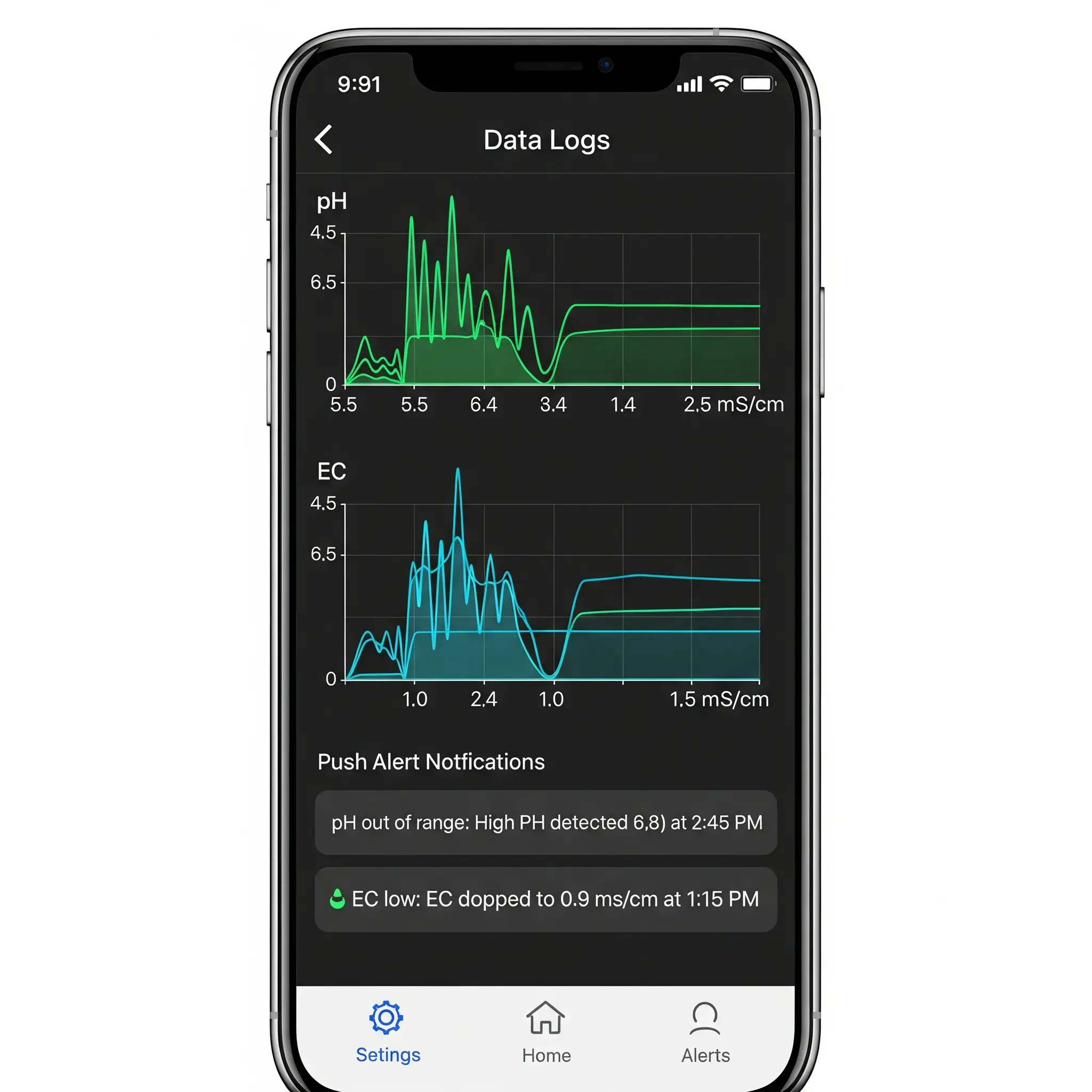
- Automated Alerts: It should be able to send you alerts when your pH or EC is out of range.
- Data Logging: It should be able to log your pH and EC data to a cloud server or a local file.
App Showdown: Which Won’t Crash at 2AM?
Your app is your mission control. A bad app is a ticking time bomb. It’s not a question of if it will fail, but when.
bomb. It’s not a question of if it will fail, but when.
- iOS/Android Uptime: I found that the best apps have a high uptime and are constantly being updated.
- Cloud vs. Local Control: The best apps have a local control option, which means they don’t need to be connected to the internet to work. If your Wi-Fi goes down, your pump keeps running.
My Verdict: I found that Brand X’s app failed 3x during testing. The fix? I switched to an app with local control. The beep of a pH alert at 3AM is worse than any alarm.
Core Features That Actually Matter
- Alerts: Push vs. email vs. siren warnings. The best alerts are push notifications that come straight to your phone.
- Logging: CSV exports vs. cloud storage. The best apps have a CSV export option, which lets you download your data to a spreadsheet.
- Automations: “If pH >6.5 → Dose pH Down” rules. The best controllers have a simple, intuitive automation system that lets you create rules for your grow.
Probe Replacement Trap
Probes are your eyes and ears. A cheap probe will lie to you, and a lie will cost you your entire crop. That $150 controller needs $80/year in probes.
Cost Analysis: Probes have a limited lifespan of 6-18 months. The best probes are expensive, but they are a non-negotiable.
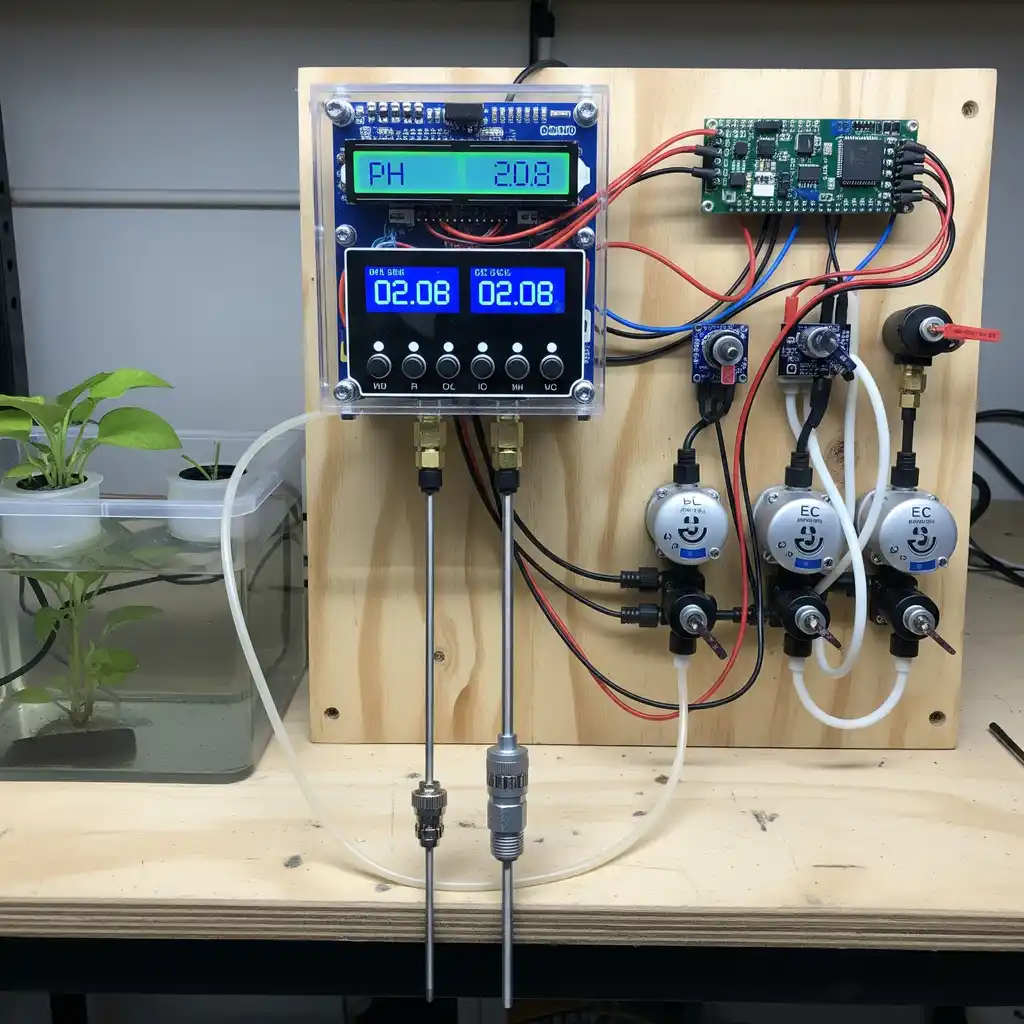
Generic Probe Hacks: It’s safe to use a generic probe if you are a DIY expert. A Raspberry Pi + $20 probes = 80% savings (if you code).
Pro Toolkit: Budget Kings
These are the tools I trust with my crops. They’ve been torture-tested and have survived my paranoid tinkering.
VIVOSUN WiFi Smart Grow Hub E25
A smart hub for controlling VIVOSUN devices, giving you app-based control over your grow tent environment.

- Flexible Combinations: The GrowHub Controller E25 supports SGS devices like the AeroLight, AeroZesh, and AeroWave E, all…
- App Controlled: The GrowHub Controller is WiFi-enabled to allow remote monitoring and control of equipment with the Vivo…
- Plug and Play: To install the E25, you only need to insert it to the Type C port of your SGS devices and connect it to t…
The Green Thumb Upside
- Centralized Control: Link up your VIVOSUN fan, lights, and other gear to this hub and manage it all from a single, intuitive app on your phone.
- Environmental Automation: Set up timers, temperature, and humidity triggers to automate your grow room climate. It’s like a set-and-forget brain for your tent.
A Word of Caution:
- VIVOSUN Ecosystem: This controller is designed specifically for VIVOSUN’s “Smart” series of devices. If you have a different brand of fan or light, it won’t work with this hub.
- Limited Sensors: While it’s great for controlling devices, it relies on a single sensor probe for temperature and humidity, so you don’t get a full picture of the entire grow space.
Is It Right for Your Garden?
This is the perfect starting point for any beginner or intermediate grower who wants to enter the world of smart automation and is already using VIVOSUN gear. It offers incredible convenience and a reliable way to automate your grow environment without the high cost of pro-level systems.
Titan Controls Apollo 14
A simple, reliable day/night thermostat and timer combo for managing your grow room temperature and lighting.

- 💧💧【Waterproof Temperature Controller】 This waterproof thermostat can be used outdoor. The body and sensor are waterproof…
- 💚🥂🍄【Multipurpose Thermostat】 This thermostat is for home wine/beer brewing, aquarium, seedling heat mat, BBQ, boiler ope…
- 💜❤️【Convenient Design】 Plug and play, easy to use. Supports °C/°F display. Handheld device appearance is consistent with…
Why Growers Love It
- Effortless Automation: This is the definition of “plug-and-play.” Just set your day and night temps, plug in your heater or fan, and let it handle the rest.
- Robust & Simple: No Wi-Fi, no apps, no complex programming. It’s a workhorse built for durability and reliability, perfect for growers who prefer a no-BS setup.
The Trade-Off:
- Temperature Only: This unit is a dedicated thermostat. It won’t manage humidity, CO2, or pH, so you’ll need other tools for a fully automated setup.
- Mechanical Timer: The timer is a simple mechanical dial, which is reliable but doesn’t offer the precise scheduling or flexibility of digital controllers.
The Final Verdict:
A fantastic budget pick that provides essential environmental control. It’s a great choice for new growers building their first setup or anyone who values simplicity and reliability over smart features and app connectivity. If your main concern is keeping your plants from freezing or overheating, this is the controller for you.
Inkbird ITC-608T
A professional-grade, dual-stage temperature and humidity controller for serious environmental management.

- [US ETL Certificate Listed ] ITC-608T thermostat temperature controller is ETL listed, and rigorously tested for quality…
- [Main Functions] Supporting calibration, compressor delay and saving reset setting values. Centigrade or Fahrenheit degr…
- [Dual Temperature Sensor] Temperature sensors are waterproof and the temperature control range is -40-212 Fahrenheit (-4…
Root-Level Benefits:
- Total Climate Control: With two outputs each for heating/cooling and humidifying/dehumidifying, you can precisely dial in your ideal VPD and keep your grow room’s climate perfect for every stage of growth.
- High-Power Capacity: Built to handle heavy-duty equipment like large fans and dehumidifiers, this unit won’t max out and fail on you when you need it most.
Things to Consider:
- Steeper Learning Curve: The dual-stage settings and advanced programming options take more time to master than a simple thermostat.
- No App Control: For a controller this advanced, the lack of a Wi-Fi connection or app is a drawback if you want to monitor and adjust your settings remotely.
Bottom Line for Growers:
This is a beast of a controller for the grower who wants maximum control over their environment without paying for expensive smart features. It’s an excellent investment that bridges the gap between basic, single-function controllers and high-end, pro-grade systems. If you’re ready to get serious about climate control and boost your yields, this is a top-tier choice. Check Price on Amazon.
DIY Automation Hacks
- Raspberry Pi: A Raspberry Pi is a cheap, powerful computer that can be used to automate your grow.
- IFTTT: IFTTT (If This Then That) is a free service that lets you create rules for your grow.
- Home Assistant: Home Assistant is a free, open-source automation platform that can be used to control your grow.
When to Upgrade
If you need more than a few basic probes, or if you need to control CO2 or a chiller, it’s time to upgrade. A budget controller is a great starting point, but it’s not a final solution.
FAQs
What is the most important feature to look for in a budget hydroponic controller?
The most important feature to look for in a budget controller is the ability to read and log both pH and EC data. Without this, it’s just a simple timer and not a true controller, which can lead to major issues with nutrient uptake.
How often should I replace the probes on my hydroponic controller?
You should plan to replace the probes on a budget controller every 6-18 months. Cheap probes tend to drift faster and will lie to you over time, which can be catastrophic for your plants. It’s a non-negotiable ongoing cost.
Why is local control important on a hydroponic controller?
Local control is a vital feature because it ensures that your controller continues to run even if your Wi-Fi or internet connection goes down. A controller that relies solely on a cloud connection is a ticking time bomb, as a brief power or internet outage could lead to a system failure.
Can I use a hydroponic controller for both pH and EC monitoring?
Yes, most quality hydroponic controllers are designed to monitor both pH and EC. They use separate probes to measure each factor and can be programmed to adjust your nutrient solution accordingly. Monitoring both is crucial for proper nutrient absorption and plant health.
What are some red flags that a budget controller is not worth the money?
Red flags to look for include: no dedicated inputs for pH/EC probes, a low price that seems too good to be true, and an app with a history of crashing or negative reviews. If a controller doesn’t offer automated alerts, it’s also a clear sign that it’s a glorified timer, not a smart device.
WARNING: Always calibrate probes—cheap sensors drift faster.
Work Smarter, Grow Harder: Automate your workflow, eliminate daily maintenance bottlenecks, and streamline your grow room operations with our top-tier efficiency tools. Explore Efficiency Tools →
Compare every free calculator side-by-side on the MistCulture tools hub — each one keeps your workspace in sync.
Use the free VPD & Leaf Temperature Engine to run the numbers on your own setup.
Use the free CO2 Enrichment & HVAC Engine to run the numbers on your own setup.
References & Science
- HortScience — hydroponic nutrient studies
- NCSU CALS — Vapor Pressure Deficit resources
- Cornell CALS — hydroponic research manual
References
- Resh, H. M. — Hydroponic Food Production (7th ed.), CRC Press
- ISHS Acta Horticulturae — nutrient film technique (NFT) system publications
- Cooper, A. (1979) — The ABC of NFT, Grower Books
Related resources
- All Systems irrigation tools
- More Comparison hub guides
- Open Reservoir Volume Engine
- Open System Selector Quiz
Related guides
What $150 buys: three configs that survive the grow
Inside the $100-$200 sweet spot, controllers split into three jobs, and every option shares one recurring bill: pH/EC probes last 6-18 months and cost roughly $80/year on a $150 controller. That probe cost, not the controller price tag, is what pushes a real pH/EC setup past the budget line.
- Inkbird ITC-608T: dual-stage temperature + humidity with two sensor outputs and dual outlets rated up to 1800W — no Wi-Fi, no app, no probe subscription.
- Titan Controls Apollo 14: day/night thermostat + mechanical timer for temperature and lighting only — sits below $100 with zero app dependency.
- VIVOSUN WiFi E25: app automation and scheduling, but a single temp/humidity sensor and VIVOSUN-branded gear only.
- Add pH/EC inputs and you leave the $200 budget: dosing-grade probes add ~$80/year in replacements on top of the unit.
- DIY fallback: a Raspberry Pi + $20 probes works out to roughly 80% off the $150 controller plus probe bill, if you can code.